Smart Bathrooms: Luxury Splurge or Everyday Essential?

The first time I used a bathroom with a smart toilet, I was staying at a friend's place and spent about five minutes trying to figure out why there was a control panel on the wall next to what looked like a perfectly ordinary toilet. I eventually worked out the bidet function and spent the rest of the trip mildly obsessed with the fact that I had apparently been wrong about what a bathroom could feel like.
That experience planted a question I have thought about since: how much of what the smart bathroom industry offers is genuine improvement to daily life versus expensive novelty that impresses guests and then fades into the background? I have spent time with several smart bathroom products since then, from the affordable end to the genuinely premium, and the answer is more nuanced than either the enthusiast reviews or the skeptical dismissals suggest.
The Case for Smart Bathrooms: What Actually Improves
The most common morning bathroom friction points are almost embarrassingly mundane. The mirror fogs up while you are trying to use it. The lighting is wrong for the task you are doing. The water temperature requires a minute of adjustment before it is usable. These are small problems but they happen every single day, and anything that removes them consistently compounds into a meaningful improvement in the experience of the room.
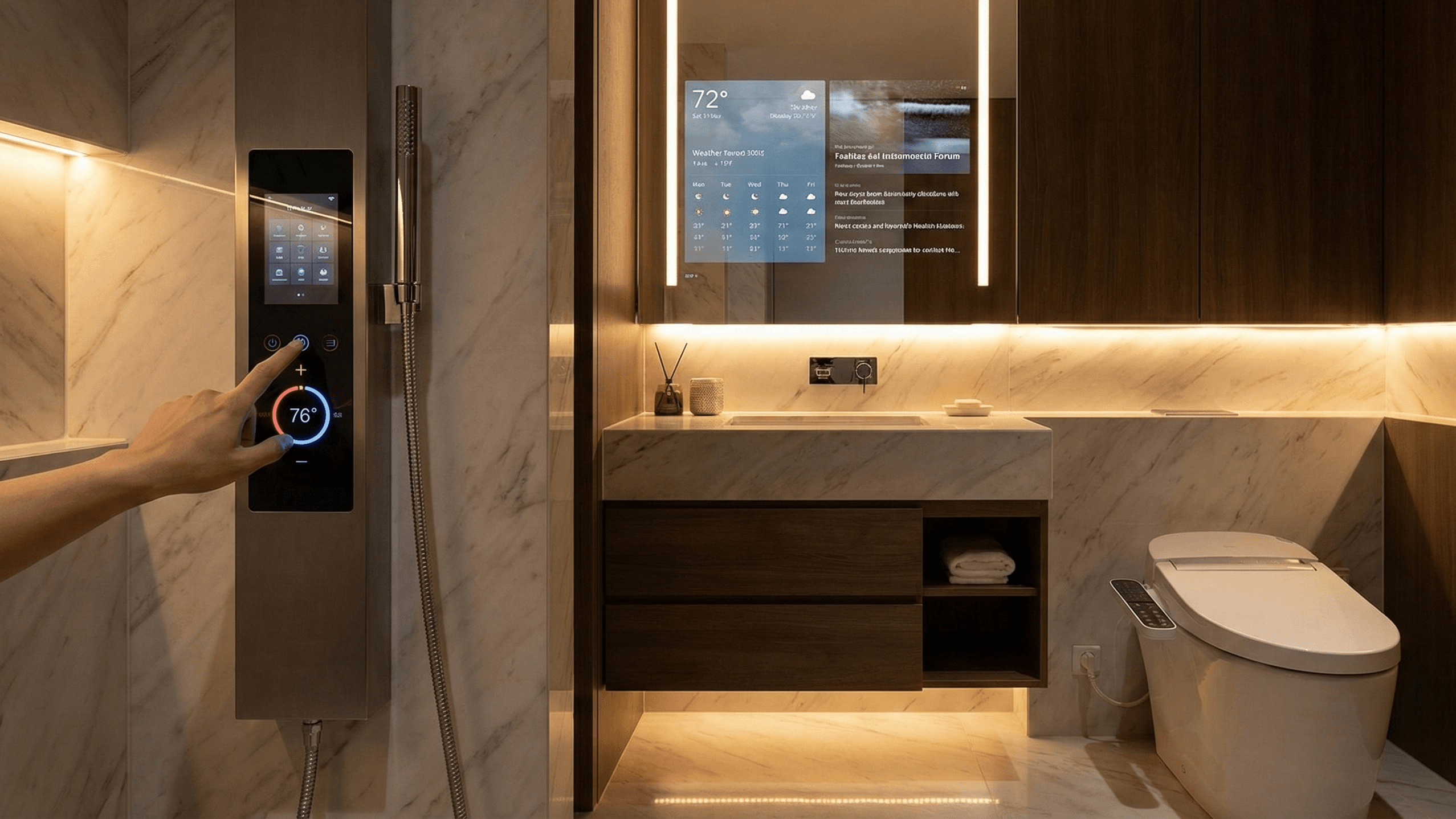
A heated anti-fog mirror is the smart bathroom product with the clearest and most immediate practical benefit. The technology is simple: a heating element behind the mirror keeps the surface above the dew point so condensation never forms. No wiping, no waiting, the mirror is just clear. Combined with well-designed LED lighting that can be adjusted for different tasks, this alone changes how the room functions on a daily basis. These are not dramatically expensive upgrades and they work without requiring any ongoing attention.
Programmable shower systems that hold a preferred temperature address a genuine daily irritation, particularly in households with multiple people who have different temperature preferences and in homes with slow-responding hot water systems. The appeal of a shower that is already at your preferred temperature when you step in rather than requiring a minute of standing next to a stream of water waiting for it to warm up is straightforward. Whether it is worth the cost of a digitally controlled shower valve depends on how much the current situation actually bothers you, but for people who share bathrooms with varying preferences it is a practical solution to a real problem.
Touchless or sensor-activated faucets, which became more common in public spaces and then crossed into residential bathrooms, reduce the surface contact points in the room where you are presumably trying to clean yourself. The hygiene argument is real, and the convenience of a faucet that responds to your hands being near it without requiring you to touch a handle is one of those features that becomes invisible through habit and then feels conspicuously absent when you use a conventional faucet.
The Bidet Question
This deserves its own section because the gap between how bidets are perceived by people who have not used them and how they are regarded by people who have is unusually large.
Bidet toilet seats, which attach to your existing toilet and add a washing function, are the most practical entry point and the smart bathroom upgrade that most reliably converts skeptics into advocates. The hygiene improvement is genuine and is not trivially comparable to using paper alone. The reduction in paper use is real and measurable. For anyone with certain health conditions, the improvement in comfort and hygiene is significant. These are not marketing claims; they reflect the experience of users who have used them consistently over time.
Entry-level bidet seats from Toto or BioBidet, which include heated seats and basic washing functions, are not dramatically expensive and the installation is a straightforward DIY project that requires no plumbing work. These are the most practical entry point into smart bathroom upgrades for most people and the one I would suggest starting with if you are curious about the category.
The more sophisticated end of the intelligent toilet market, including self-cleaning systems, automatic lid operation, integrated deodorising, and health-monitoring features in some models, represents a significant investment. The Toto Neorest range in particular is a premium product that is genuinely excellent in use, but it is a bathroom fixture that costs more than many complete smart home setups. For most people, the entry-level bidet seat captures ninety percent of the practical benefit at a fraction of the cost.
Where Smart Bathroom Technology Is Not Worth the Investment
Smart showerheads that connect to an app to let you start the shower remotely are a product category I am genuinely skeptical about. The practical scenario where you need to start your shower from another room before you are ready to get in is niche at best, and the added complexity of a Wi-Fi connected showerhead introduces failure modes into a plumbing fixture that is now required to work reliably every day for years.
Voice-controlled bathroom fixtures in general occupy a strange position in the smart home ecosystem. The bathroom is the room in the house where most people least want a device listening, and the scenarios where voice control meaningfully improves on using your hands are limited. Saying "make the water warmer" while standing in the shower is marginally more convenient than adjusting a digital control on the shower wall, but it requires a voice assistant either in the bathroom itself or within hearing range of the bathroom.
The health monitoring features in some high-end smart toilets, which use sensor data to track hydration and certain health markers, are an interesting direction but currently represent technology that is available on premium products while the consumer value is still being established. For most people considering smart bathroom upgrades, these features are not relevant to the purchasing decision for several more years.
How to Think About the Investment
The smart bathroom products with the clearest return on daily experience improvement are anti-fog mirrors with good lighting, bidet seats at any price point above the very cheapest, and thermostatic shower controls if your current shower temperature management is frustrating.
These are upgrades to things you use every day. The calculation is different from buying smart home technology for a room you use occasionally, because the daily use frequency means that even a small improvement to the experience compounds significantly over time. A better morning routine that adds five minutes of pleasant time rather than minor friction is worth taking seriously.
For renters, the options are more limited but not absent. Bidet seats attach to existing toilets without permanent modification and remove when you move. Smart mirrors with surface-mount installation work in many rental situations. Motion-activated nightlights for bathroom visits are entirely non-permanent and genuinely useful.
For homeowners doing a bathroom renovation, integrating smart elements at the renovation stage rather than retrofitting them later is substantially less expensive and allows for a cleaner result. Adding a heated mirror or a thermostatic shower valve during a renovation adds a relatively small cost to the total project budget.
The honest answer to whether smart bathrooms are luxury splurges or everyday essentials is that it depends entirely on which specific products you are considering. A bidet seat is an everyday essential that most people who try one would not want to live without. A high-end smart toilet with health monitoring is a luxury at current prices and maturity levels. An anti-fog heated mirror is somewhere in between: clearly useful but not in the same category as products that genuinely change how the room functions for daily hygiene. Knowing which category each product falls into before buying saves you from both missing genuine improvements and overpaying for features that will not change your daily experience.
The bidet seat is the one smart bathroom upgrade I would recommend without qualification to almost anyone. Everything else is more contextual.


