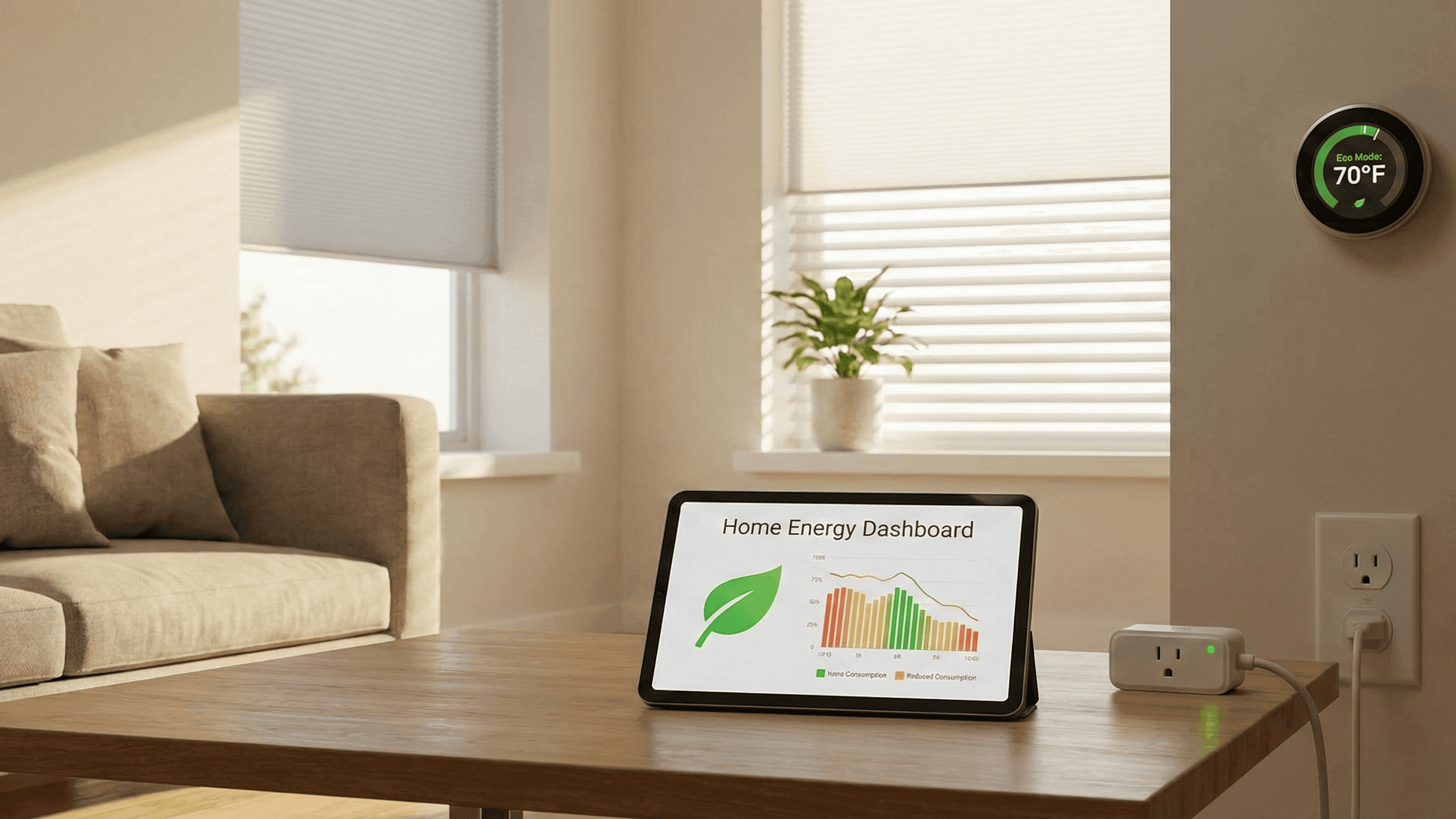
Smart Home Tech for Sustainable Living: Easy Ways to Go Green at Home

I did not get into smart home technology for environmental reasons. I got into it because I was tired of forgetting to turn things off and because I wanted my apartment to feel more comfortable without constantly fiddling with switches and remotes. The energy savings were a side effect I noticed after about three months when I looked at my electricity bill and compared it to the same month the previous year.
The difference was not enormous but it was real and it was consistent. Over twelve months the cumulative savings were meaningful enough that the smart home setup had essentially paid for itself, at least the energy-related parts of it. I had not set out to reduce my environmental impact but I had done it anyway as a consequence of just automating things I was already doing badly manually.
This is what I think is the most honest framing for smart home technology and sustainability: the environmental benefit is genuine, but it comes as a byproduct of solving practical problems rather than as the primary motivation. If you approach it that way, the technology actually delivers. If you buy things specifically because they are marketed as green, you are more likely to end up with expensive gadgets that do not change your actual usage patterns.
Where Household Energy Actually Goes
Before understanding where smart technology helps, it is worth knowing where home energy is actually consumed, because the answer does not match most people's intuitions.
Heating and cooling typically accounts for somewhere between forty and sixty percent of residential energy use, depending on the climate and the efficiency of the home. This is the biggest category by a significant margin, and it is the one where smart technology makes the most measurable difference.
Water heating is usually the second largest category, accounting for around fifteen to twenty percent in most homes. Lights and plug loads, which is the category most people think of first when they consider energy efficiency, typically represent only ten to fifteen percent of total consumption. This means that sophisticated smart lighting, while genuinely useful for convenience and comfort, has a relatively modest impact on overall energy use compared to heating, cooling, and water heating.
Understanding this distribution helps you prioritise which smart home investments will have the most impact versus which ones are primarily about convenience with a sustainability benefit that is real but secondary.
Heating and Cooling: The High-Impact Category
A smart thermostat is the single smart home device with the highest potential energy impact for most households, for the straightforward reason that it controls the largest energy consumer in the home.
The primary mechanism through which smart thermostats save energy is presence-based temperature management. A standard programmable thermostat runs a fixed schedule regardless of whether anyone is home. A smart thermostat with geofencing automatically shifts to an energy-saving setback when everyone leaves and restores comfortable temperatures before anyone returns. For households with irregular schedules, which is most households, this eliminates the common situation of conditioning an empty home because the clock says it is time to be home.
The Google Nest Learning Thermostat automates this through a combination of learning your schedule from usage patterns and geofencing through the app. The Ecobee SmartThermostat uses both geofencing and occupancy sensors built into the device itself, which provides a more reliable presence signal in households where people do not always carry their phones. Both have published data suggesting average energy savings in the range of ten to fifteen percent on heating and cooling bills.
For homes with split AC systems and handheld remotes rather than central HVAC thermostats, a smart IR controller provides similar scheduling and presence-based control without replacing any existing hardware. The Switchbot Hub Mini and the Broadlink RM4 Mini both do this effectively at a fraction of the cost of a smart thermostat.
The practical automations that deliver the most energy savings are simple: stop heating or cooling an empty home, and avoid running climate systems at extreme settings when moderate settings with fans would achieve equivalent comfort. These are not complicated to implement and the impact is immediate.
Lighting: Genuine Savings With Appropriate Expectations
Smart lighting saves energy through two distinct mechanisms, and it is worth understanding both because they are different in magnitude.
The first is LED efficiency. Smart bulbs are LED bulbs, and LED technology is dramatically more efficient than incandescent bulbs. If you are still running incandescent bulbs anywhere in your home, replacing them with any LED, smart or otherwise, will reduce lighting energy use by around seventy to eighty percent for those fixtures. The smart functionality is not required for this saving; you get it just by switching to LED.
The second mechanism is automation. Smart bulbs that turn off automatically when a room is empty, that dim to lower levels in the evening, and that follow schedules rather than relying on humans to remember to switch them off, genuinely reduce energy waste from lights being left on unnecessarily. In my experience this is a real but modest saving compared to the HVAC category.
Motion sensors in rooms with variable occupancy, particularly bathrooms, hallways, and utility areas, eliminate the common pattern of lights being left on in unoccupied spaces for hours at a time. This is where automated lighting makes the most practical difference to actual energy consumption.
The energy monitoring available in some smart home systems, where you can see actual electricity consumption from individual circuits or devices, is genuinely useful for understanding where your energy goes and identifying unexpected consumption from devices running in unexpected ways.
Water: The Category Worth More Attention
Water is an environmental resource that smart home technology addresses less comprehensively than energy, but the available tools are more useful than most people realise.
Leak detection is the most impactful water-related smart home upgrade and the most underrated. Small leaks, from running toilets, dripping taps, or slow pipe seeps, can waste significant amounts of water continuously without being obvious enough to notice without specifically checking. A whole-home water monitor like the Flo by Moen detects anomalies in water flow patterns that suggest a leak and alerts you. Some can shut off the water supply automatically if a significant leak is detected. The water savings from catching a slow running toilet within days rather than months is real and measurable.
Smart water leak sensors placed under sinks, near appliances, and at other risk points provide earlier warning of developing leaks before they cause damage or waste significant water.
For outdoor watering where applicable, smart irrigation controllers like the Rachio skip scheduled watering when rain is forecast or has recently occurred, and adjust schedules based on local weather data. This reduces outdoor water use by eliminating the inefficiency of irrigation systems running in the rain or on a fixed schedule regardless of actual conditions.
Standby Power: Small Savings at Low Effort
Standby power, the electricity consumed by devices when they are switched off but still plugged in, accounts for a small but non-trivial portion of household electricity use. Televisions, gaming consoles, desktop computers, and audio equipment all draw power continuously when on standby.
Smart plugs with schedules that cut power overnight or when you leave the home eliminate this consumption at essentially zero effort after the initial setup. The saving per device is small, but across a full apartment's worth of entertainment and office equipment it adds up over a year.
The more impactful version of this is using smart plugs to cut power to devices that have no reason to be on during specific periods. A desktop computer setup that draws power through the night in standby mode, running five nights a week, wastes a meaningful amount of electricity over a year. A scheduled smart plug that cuts power after midnight and restores it before the working day requires no ongoing thought after setup.
Making the Sustainability Case Honestly
The honest version of smart home technology and sustainability is that the technology delivers real environmental benefits when it is solving real problems. Automating climate control in a home where you currently condition empty rooms saves energy. Adding LED bulbs and motion-based automation to spaces where lights are frequently left on saves energy. Installing leak detection in a home that has had undetected slow leaks for months saves water.
It does not save energy to buy more devices than you need, to replace perfectly functional hardware before the end of its useful life, or to add automation to things that do not currently have a waste problem.
The practical approach is to identify where your home currently wastes energy or water, then target the specific technology that addresses that specific problem. For most homes the answer involves some form of smarter climate control first, leak detection if it has not been addressed, and lighting automation in rooms with variable occupancy. Beyond that, the incremental environmental benefits of additional smart home devices become smaller relative to the cost and complexity they add.
The sustainability benefits of my smart home setup were not something I planned for but they have been real and consistent over four years. The technology that contributed most was the climate control automation, by a significant margin over everything else.


