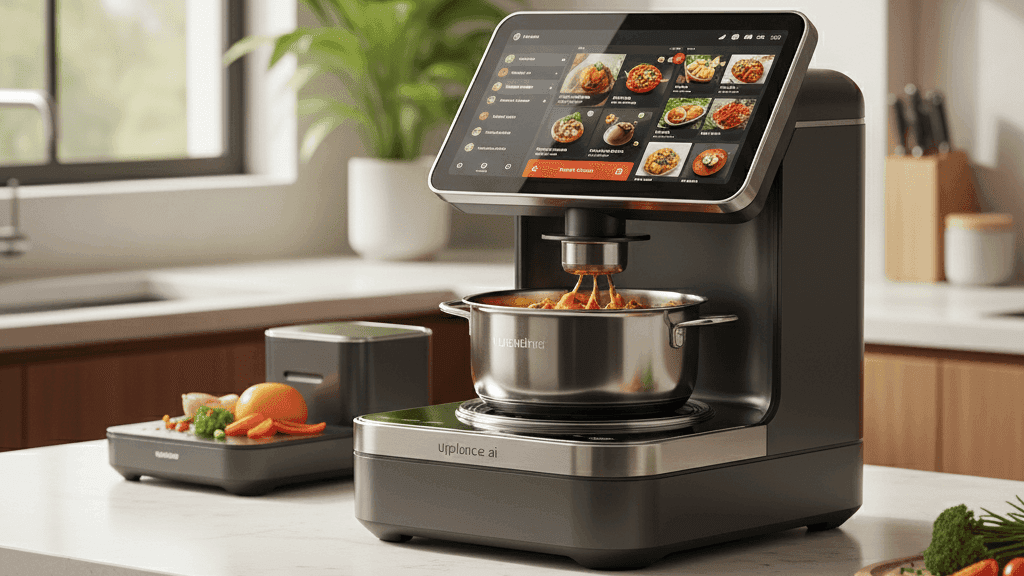
Smart Gadgets That Practically Cook for You

Cooking takes more time than most people want it to. Not the enjoyable part of cooking, the creative decisions and the smell and the occasional satisfying result, but the other parts: the waiting, the watching, the stirring, the monitoring, the timing juggle when three things need attention at once. Smart kitchen technology has been quietly getting better at handling exactly those parts while leaving the enjoyable decisions to you.
This is not a guide to kitchen gadgets that sound impressive and mostly sit in a cupboard. It is about devices that genuinely reduce the time and attention cooking requires, with realistic assessments of where they deliver and where the marketing overpromises.
The Multi-Cooker: Pressure Cooking That Actually Works
The multi-cooker category, which the Instant Pot popularised and which now includes excellent options from Ninja, Breville, and others, is the smart kitchen purchase with the highest ratio of practical time savings to cost for most households.
The core function is pressure cooking, which reduces cooking times for slow-cooked dishes by up to 70 percent. Dried chickpeas that normally need twelve hours of soaking and two hours of cooking are done in forty-five minutes from dry. Beef stew that takes three hours on the hob takes forty-five minutes under pressure. Chicken stock that takes hours simmering reduces to about thirty minutes. These are not marginal improvements. They are the difference between dishes being viable on a weeknight and only practical on weekends.
The smart functionality in connected multi-cookers adds remote start through an app and push notifications when cooking is complete. The Instant Pot Pro Plus and the Breville Fast Slow Pro both offer these features. Remote start is genuinely useful for households where someone leaves in the morning and wants to start a braise or stew during the day so it is ready for the evening. Notifications mean you are not anchored to the kitchen waiting for a cycle to finish.
The limitation of multi-cookers is that they require manual preparation of ingredients. You still need to chop and brown and add things in the right order. What they remove is the extended supervision time. Once the lid is locked and the programme is running, you can leave completely.
For anyone who regularly eats slow-cooked dishes, pulses, grains, or soups, a pressure cooker multi-cooker is the single most time-saving kitchen device available at a reasonable price.
The All-in-One Cooking System: Thermomix and Its Category
The Thermomix TM7 represents the category of cooking machines that genuinely attempt to automate the most labour-intensive parts of cooking preparation. It combines weighing, chopping, cooking, blending, and stirring in a single unit, walks you through recipes step by step, and handles the execution of those steps with precise temperature and speed control.
What this actually means in practice: you prepare ingredients by weight directly in the mixing bowl using the built-in scales, the machine chops or processes them at the speed you specify, cooks them at the temperature the recipe requires while stirring automatically, and alerts you when you need to add the next ingredient or take a manual action. The Cookidoo recipe platform, which is a subscription service that integrates directly with the machine, means the recipe instructions appear on the device's screen with each step timed and auto-executed.
The honest assessment: it is most valuable for households that cook genuinely complex dishes regularly and where the labour of preparation is the main barrier. For weeknight cooking of straightforward meals, it is substantial overkill. The cost is significant. The learning curve to use it efficiently is real. People who use it daily over years tend to become genuinely attached to it. People who cook simple meals or eat out frequently often find it an expensive novelty that does not earn its counter space.
The Thermomix is not a product I would recommend for most households. But for someone who cooks complex dishes, hosts regularly, and bakes frequently, the automation of preparation steps is transformative enough to justify the investment.
Smart Ovens with Temperature Probes
Smart ovens and smart countertop ovens with built-in probe thermometers represent a category where the technology genuinely improves cooking outcomes rather than just adding convenience.
The fundamental problem a temperature probe solves is that cooking time is an unreliable proxy for doneness. A chicken breast reaches food-safe temperature at different times depending on its thickness, starting temperature, and the oven's actual calibration. A roast finishes cooking when its internal temperature reaches the target, not when the timer goes off. Traditional cooking relies on estimating this, which leads to overcooking to be safe or undercooking by accident.
A smart oven with a probe that monitors internal temperature and stops cooking when the target is reached eliminates this uncertainty. The June Oven uses computer vision to identify what food is placed inside and automatically selects appropriate temperature and probe targets. Less sophisticated smart ovens simply let you set a target temperature and alert you or switch to keep-warm mode when reached.
The meaningful benefit for home cooks is consistency. Dishes that come out right with a probe come out right every time the same way. This matters most for the dishes where getting it wrong is most costly: expensive cuts of meat, complicated roasts, dishes that are genuinely difficult to rescue if they overcook.
For households where a full-size oven is already present and well-used, a countertop smart oven supplements rather than replaces it and is most valuable for those whose main oven lacks probe capability. For smaller households where a countertop unit serves as the primary oven, the smart features pay for themselves more quickly.
The Air Fryer: Not Particularly Smart, But Genuinely Useful
Air fryers are not especially smart devices. Most of them are simple countertop convection ovens with a basket optimised for circulating hot air around food. What they are is genuinely faster and more convenient than a full-size oven for the specific foods they handle well: roasted vegetables, fish fillets, chicken pieces, reheated items that you want crispy rather than soft, and anything that benefits from hot dry air circulating around it.
The speed advantage is real. A conventional oven takes ten to fifteen minutes to preheat and then additional cooking time. An air fryer reaches temperature in two to three minutes. For weeknight cooking of moderately-sized portions, the total cooking time difference can be twenty minutes or more.
The connected versions with app control and recipe libraries add minimal practical value over non-connected equivalents in this category. The cooking process is fast enough that remote monitoring is rarely necessary, and the app recipes are generally no better than the countless air fryer recipe resources available online. The smart premium for air fryers is the area where I would least recommend paying it.
What is worth looking for in an air fryer is a basket large enough for your typical meal size without being so large it is inefficient for smaller portions, a design with a detachable basket that is dishwasher-safe, and a wide enough temperature range to handle both delicate reheating and high-heat crisping. These are functional considerations rather than smart ones.
What the Kitchen Technology Market Gets Wrong
A pattern in smart kitchen marketing worth being aware of: the word AI frequently describes what are actually preset programmes with good names attached to them. A multi-cooker that has a "smart" mode for rice is detecting nothing and learning nothing. It is running a preset programme that works well for rice. This is fine, preset programmes that work reliably are valuable, but calling it AI raises expectations that the technology does not meet.
Genuine adaptive cooking technology, where sensors detect actual conditions and adjust the cooking process in real time, exists in the more expensive appliances: the Thermomix, high-end combi ovens, and some precision temperature cookers. It does not exist in the majority of products marketed with AI terminology.
Knowing this distinction helps calibrate purchases appropriately. A multi-cooker with reliable rice, soup, and pressure cooking modes is genuinely useful even if those modes are fixed programmes. Expecting it to adapt intelligently to unusual loads or conditions based on AI sensors will lead to disappointment.
Making Practical Decisions
The most useful framing for smart kitchen technology is to identify the specific part of cooking that costs you the most time or causes the most failures, and then look for technology that specifically addresses that problem.
If it is long cooking times for slow-cooked dishes, a multi-cooker with pressure cooking makes an immediate and measurable difference.
If it is inconsistency in cooking outcomes for specific dishes, a temperature probe either integrated into an oven or as a standalone wireless unit addresses that specifically.
If it is the labour of preparation, chopping, weighing, and initial cooking steps, then an all-in-one system like the Thermomix is what you are describing, though the cost requires honest assessment of how frequently you would use it.
If it is speed and convenience for quick weeknight meals, a well-chosen air fryer or convection toaster oven handles a surprising proportion of everyday cooking faster than a full-size oven.
None of these devices will make cooking interesting if you find it uninteresting. What they can do is reduce the parts that are merely effortful, which may or may not be the barrier between you and cooking more frequently.
The multi-cooker sits on my counter and gets used three or four times a week. Everything else I have tried has been useful in more specific circumstances. Starting with the device that addresses your most common cooking friction is better than starting with the most impressive one.

