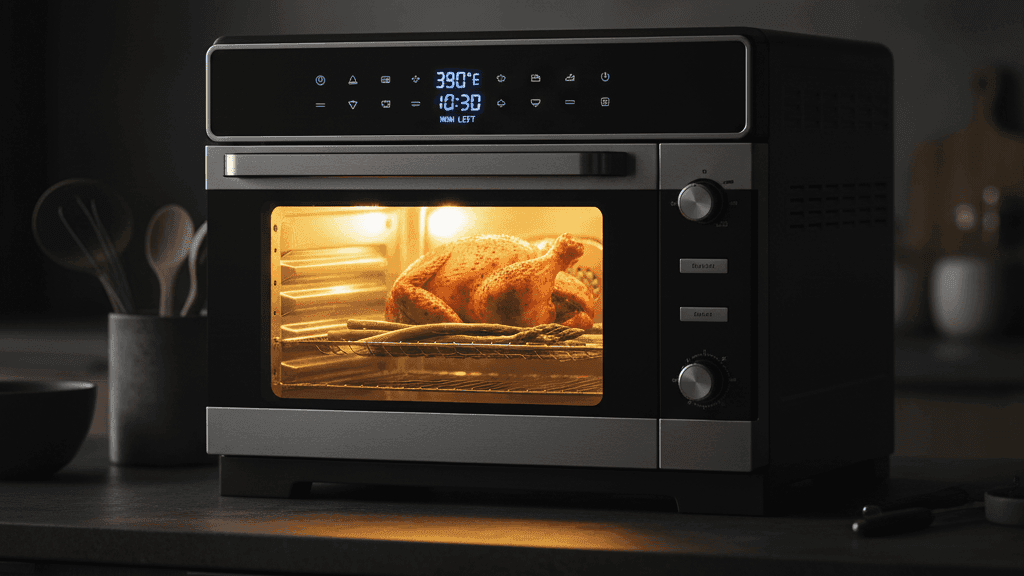
Are Smart Ovens & Air Fryers Worth It? A Home Cook's Guide

I bought my first air fryer with fairly low expectations. A friend had been talking about hers for months with the specific enthusiasm people reserve for things they cannot quite believe they did not have earlier, and I eventually gave in mostly to see what the fuss was about. Within two weeks it had replaced my full-size oven for about sixty percent of my cooking, and the full-size oven has since been relegated to the dishes that genuinely need it.
That experience is what prompted me to look more seriously at smart kitchen appliances as a category. Not because I think all of them are that good, but because the gap between a genuinely well-designed kitchen device and a mediocre one is large enough that dismissing the whole category based on poor examples, or buying enthusiastically without evaluating what specific problem a device solves, both lead to the same outcome: expensive hardware that does not improve your cooking life.
This is the honest assessment of smart ovens and air fryers from someone who has spent significant time with both.
What an Air Fryer Actually Does
An air fryer is a compact convection oven with a perforated basket that allows hot air to circulate around food from all sides simultaneously. The circulating hot air removes surface moisture and creates the dry, high-heat conditions that produce crispiness without submerging food in oil.
This works exceptionally well for certain foods. Frozen foods that you want crispy rather than soggy come out significantly better than in a microwave and faster than in a conventional oven. Roasted vegetables with just a light coating of oil develop caramelisation quickly. Chicken pieces cook through while developing a browned exterior. Reheated foods like pizza and chips regain their original texture rather than becoming soft as they do in a microwave.
It works less well for foods that need ambient moisture during cooking, anything delicate that can dry out quickly, or very large items that do not fit in the basket with adequate air circulation around them.
The time advantage over a conventional oven is real and significant. A conventional oven needs ten to fifteen minutes to preheat. An air fryer is ready in two to three minutes. For a week night meal where you are making a modest amount of food, this consistently cuts total cooking time by fifteen to twenty minutes. Over months, that accumulates into a meaningful return of time.
What Makes an Air Fryer Smart and Whether That Matters
Connected air fryers add Wi-Fi or Bluetooth, an app, and sometimes a recipe library. The app typically allows you to start or adjust cooking remotely, receive notifications when a cycle finishes, and access guided recipes that send cook settings directly to the device.
I am going to be direct about this: the smart features add relatively little to the air fryer experience compared to the device's core function. Air fryers cook quickly enough that remote monitoring rarely matters. You are usually in the kitchen or nearby while a 15-minute batch of vegetables is cooking. The recipe library in the app is generally not significantly better than the widely available recipe resources that exist online for free.
The one smart feature that provides consistent value is a notification when cooking is complete. It is easy to walk away and forget about something in an air fryer since there is no visual cue from a nearby pot or the smell of something developing on a hob. An alert on your phone tells you the food is ready without requiring you to set a separate timer.
For most people considering an air fryer, the decision about which one to buy should be based primarily on cooking capacity, basket and interior ease of cleaning, temperature range, and reliability track record from user reviews. The smart features are a minor consideration rather than a primary one.
What a Smart Oven Does Differently
Smart countertop ovens, as distinct from standard air fryers, are larger units that can handle full baking, roasting, and cooking tasks more like a conventional oven than the compact air fryer format. The smart features in this category are meaningfully more useful than in air fryers.
The most significant smart oven feature is the integrated temperature probe combined with automatic cycle management. You insert the probe into your protein, set a target internal temperature, and the oven switches to keep-warm mode automatically when the food reaches it. This makes consistently cooked meat straightforward rather than a judgment call that varies based on starting temperature and thickness.
The June Oven, which uses a camera and computer vision to identify food placed inside and suggest or automatically set cooking parameters, represents the most ambitious implementation of this approach. The camera-based food identification works well for common foods and the pre-programmed settings it applies based on identification are accurate. The novelty wears off fairly quickly and experienced cooks will often override the automatic settings, but for new or uncertain cooks the guided approach is genuinely useful and reduces the frequency of cooking failures.
Remote preheating, available through the app on most connected smart ovens, is more valuable in a larger oven format than in an air fryer because oven preheating takes meaningfully longer. Being able to start preheating before you leave a grocery shop, or while you are doing other things in the house, saves a real chunk of waiting time on a regular basis.
The Honest Evaluation of Who Benefits
The people who get the most consistent value from smart ovens and connected air fryers are specific types of cooks, and being honest about which type you are is the most useful thing to do before buying.
New or infrequent home cooks benefit most from the guided cooking features. The step-by-step recipe integration, the automatic temperature settings, and the notifications that tell you when to check or when food is done reduce the cognitive overhead of cooking and the anxiety of not knowing whether something is correct. People who are building cooking confidence find that smart ovens reduce the failure rate enough to make the kitchen feel less intimidating.
Busy households where someone is managing multiple tasks alongside cooking benefit from the remote monitoring and notifications. Being able to put something in the oven, receive a notification when it is done, and not be tethered to the kitchen in the meantime is valuable when your evenings involve other responsibilities.
Experienced cooks who manage their cooking well already benefit least from smart features and most from the core performance of the appliance. For this group, the decision is primarily about whether the cooking quality and convenience of the device itself, rather than its connectivity, is worth the counter space and cost.
The Things That Are Not Worth Buying Into
Voice control for kitchen appliances is a feature I find rarely used after the initial novelty period. Adjusting oven temperature is faster using the controls on the device than through a voice assistant in most kitchens, and the assistant does not always parse cooking-specific commands cleanly. Voice control in smart ovens and air fryers is a checkbox feature rather than a functional one.
Downloadable specialty cooking programmes sound appealing and are used infrequently in practice. Most people cook the same categories of food regularly, and once the appropriate settings for those are established, additional downloaded programmes go unexplored. This is not a reason to avoid a device that has this feature, but it is also not a reason to pay a premium for it.
App ecosystems that require account creation and that could become non-functional if the manufacturer stops supporting the service are worth paying attention to in a category where device longevity matters. Appliances should ideally function as standalone devices even if the connected features stop working, and this is worth confirming before buying from less established brands.
What to Actually Look For When Buying
For air fryers, the most important specifications are basket capacity relative to what you typically cook for, ease of cleaning, and the temperature range the unit covers. A basket that is too small means cooking in multiple batches more often than is convenient. Cleaning that requires disassembling several parts is a friction that reduces how often you use it. A maximum temperature of 200 degrees Celsius handles most air fryer use cases but some recipes call for higher.
For smart countertop ovens, capacity relative to what you want to cook, the presence of a probe thermometer, and the reliability of the heating element across the temperature range matter most. A countertop oven that does not reach or hold its set temperature accurately is not more useful for being connected.
For either category, the brands with the longest track records of reliability and the widest user communities, which means the most available troubleshooting information, are worth prioritising over newer entrants with more impressive feature lists. The kitchen appliance that works consistently for five years is more valuable than the impressive one that develops problems at two.
The air fryer I bought on that friend's recommendation is still on my counter three years later and used almost daily. The smart features of the connected model I eventually upgraded to get used occasionally. The core function of the appliance is what made the difference.

