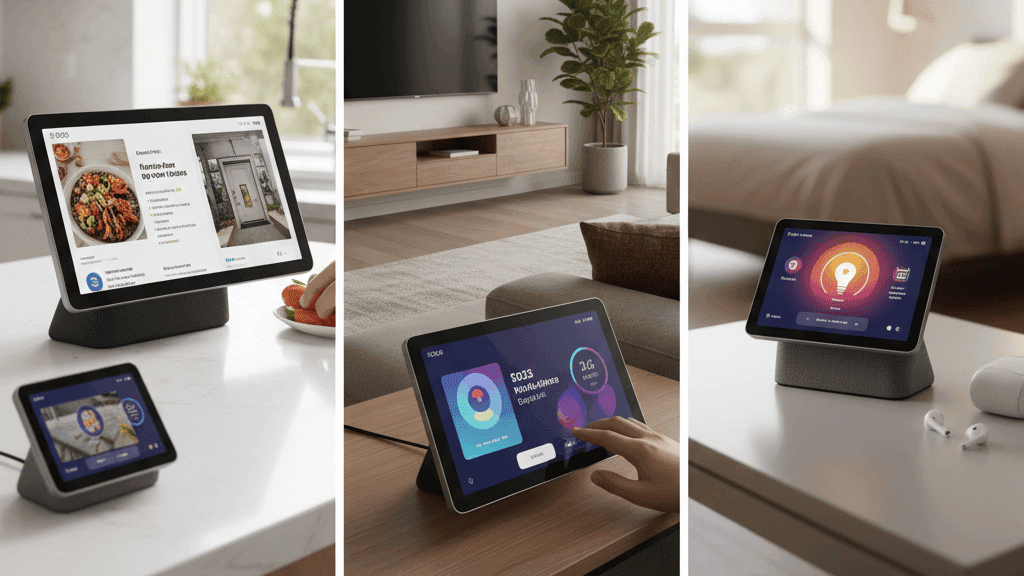
Best Smart Displays for Every Room: Complete 2025 Buyer's Guide

Smart displays are the category of smart home devices I took longest to understand the actual value of. I had an Echo Dot and used it happily for two years before a friend showed me her Echo Show and the difference was immediately obvious: having a screen changes how you interact with the device in ways that matter more than I had anticipated.
The recipe you can hear is less useful than the recipe you can see with your hands full of ingredients. The security camera feed you can ask for is one thing; seeing it appear on a screen without picking up your phone is another. The morning briefing you listen to while getting dressed is fine, but watching the weather radar while deciding whether to bring a coat is better.
This is the guide to picking the right smart display for each room, with honest assessments of what each size and price point actually delivers.
Understanding the Two Ecosystems
Smart displays divide almost entirely along the Amazon and Google lines. Amazon's Echo Show series runs Alexa and integrates tightly with Prime Video, Amazon Music, and the broader Amazon ecosystem. Google's Nest Hub series runs Google Assistant and integrates with Google Photos, YouTube, Google Meet, and Google's services.
Neither is objectively better. The right choice depends almost entirely on which ecosystem you are already using for other things. If you use Alexa for your lights, locks, and plugs, an Echo Show is the obvious display to add. If you are in the Google ecosystem with Android, Gmail, and Google Calendar, the Nest Hub range will feel more naturally integrated.
The one meaningful exception to this rule is Alexa's device compatibility breadth. If you have smart devices from many different manufacturers, Alexa generally supports a wider range of integrations, which matters if the display is going to be the control centre for a diverse setup.
The Echo Show 5: Bedroom and Small Space Workhorse
The Echo Show 5 is a 5.5-inch display in a compact format, typically priced around $90. It is designed for situations where you need a smart display's basic capabilities without taking up significant space or spending significantly.
The primary use case where it consistently excels is the bedroom nightstand. As a sunrise alarm clock that gradually brightens, as a sleep sound machine that starts and stops on schedule, as a goodnight voice trigger that dims the screen and begins a routine, the Show 5 does exactly what a bedside smart display should do. The small screen is fine for checking the time and weather but cramped for watching video, which is appropriate for the bedroom context.
The 2MP camera handles video calls adequately. The single small speaker is sufficient for voice responses and alarms but not particularly satisfying for music. Both limitations are acceptable trade-offs for the size and price.
For rooms other than the bedroom, the Show 5 works as a secondary control point: near the front door for quick security camera checks, in a home gym for music control and timers, in a bathroom where you want a small display for news or podcasts during morning routines.
Who it suits: Anyone who wants a capable bedside smart display without spending much, or anyone who needs a secondary display in a specific location without large space or budget.
The Echo Show 8: The Most Versatile Option for Most People
The Echo Show 8 is an 8-inch display typically priced around $150, and it sits at the intersection of enough screen space to be genuinely useful and compact enough to fit on most kitchen counters or desks without dominating them.
The 13MP camera with auto-framing is a meaningful upgrade over the Show 5. It tracks you as you move, keeping you centred during video calls, which matters for cooking demonstrations or any situation where you are moving around while on a call. The physical privacy shutter is good practice to use when the camera is not needed.
Audio from the two speakers is noticeably better than the Show 5 and reaches comfortable listening levels for music in a medium-sized room. Not a replacement for a dedicated speaker, but pleasant background music while cooking or working is genuinely enjoyable through it.
The screen is large enough for recipes to be readable from across a kitchen counter, for video content to be watchable during a casual lunch, and for smart home control dashboards to be clear and tappable. It is the display I would recommend to most people starting with smart displays because it handles most use cases adequately and fits most spaces.
For kitchen use specifically, the combination of hands-free voice control, recipe step-by-step display, multi-timer management with visual countdowns, and background music or video puts it directly in the room where smart displays add the most daily value.
Who it suits: Most people buying their first smart display, kitchen counter placement, home office desk use.
The Nest Hub (7-inch): Google's Answer for the Bedroom
Google's Nest Hub in the 7-inch format, typically priced around $100, is Google's most direct competitor to the Echo Show 5 for bedroom placement, with one feature that Alexa does not offer at any price: Sleep Sensing.
Sleep Sensing uses a radar sensor under the screen to detect breathing and movement during sleep, providing a sleep quality analysis in the morning without requiring any wearable. The accuracy is adequate for identifying general patterns rather than clinical precision, but for someone who wants sleep insight without wearing anything to bed, it is a genuinely unique offering.
Beyond Sleep Sensing, the Nest Hub's main differentiation from Echo Show options is the Google Photos integration. When idle, it displays your photo library as a digital frame, with automatic curated albums that surface relevant photos and is genuinely beautiful when it works well.
The Nest Hub has no camera, which Google positions as a privacy feature for bedroom placement. This eliminates video calling from the device but removes the consideration of whether the camera is pointing at you while you sleep.
Who it suits: Google ecosystem users, anyone interested in passive sleep tracking, households where privacy in the bedroom is a priority.
The Nest Hub Max (10-inch): Premium for Living Rooms
The Google Nest Hub Max, typically priced around $230, is Google's flagship display and the one that competes with higher-end Echo Show options for living room placement.
The 10-inch screen is large enough for casual video watching and genuinely comfortable for following along with YouTube or streaming content on a side table or kitchen counter. The audio from the integrated stereo speakers is the best available on a smart display without adding a separate speaker, producing real bass and enough volume to fill a medium-sized room.
The 6.5MP wide-angle camera produces good video call quality through Google Meet. The Face Match feature recognises household members and personalises the display: when you approach, your calendar and reminders appear rather than generic information. This requires opting into facial recognition, which is worth considering based on your privacy preferences.
For households where Google services are the primary digital infrastructure and where the living room or bedroom needs a capable display with good audio, the Nest Hub Max is the most polished option available.
Who it suits: Google ecosystem users who want premium audio and a larger screen, living room placement, anyone who uses Google Meet for video calls.
The Echo Show 15: The Wall-Mounted Family Hub
Amazon's Echo Show 15 is a 15.6-inch Full HD display designed for wall mounting as a central household information hub. Priced around $250, it occupies a different role from the smaller displays: less a personal device and more a shared household surface.
Wall-mounted in a kitchen or hallway, it shows household calendars, shared shopping lists, sticky notes, camera feeds, and smart home controls on a display large enough to see from across a room. The widget layout is customisable, allowing each household member to personalise what appears for them through Face Match recognition.
The Fire TV functionality that Amazon added makes it capable of streaming video content, which is genuinely useful as a secondary entertainment screen in a kitchen or utility room where you want to catch up on something while cooking or doing household tasks.
The limitation is the commitment it requires. Wall mounting means choosing a permanent location and committing to it. The display needs a power outlet within reach. The size that makes it useful as a hub display is also the size that makes it look odd on a counter or table.
Who it suits: Households that want a central shared information display, families who would use a shared calendar and shopping list system, kitchens with suitable wall space.
Matching Display to Room
The kitchen is where smart displays provide the most immediate and consistent daily value. Recipe display, timer management, music or background video while cooking, quick shopping list additions, and security camera check-ins all happen naturally here. The Echo Show 8 is the starting recommendation; the Echo Show 15 for wall mounting in larger kitchens.
The bedroom suits smaller, less intrusive displays. The Echo Show 5 for Alexa users, the Nest Hub 7-inch for Google users and anyone interested in Sleep Sensing. Neither should be the loudest thing in the room.
The living room benefits from the best audio available if the display is going to be used for music or casual video watching. The Nest Hub Max is the option with the most satisfying integrated audio.
The home office benefits from good camera quality for video calls and a screen large enough to check information without switching to the main computer. The Echo Show 8's camera and auto-framing make it the practical choice.
What to Actually Consider Before Buying
Your existing ecosystem is the first filter. Alexa devices work better with Alexa smart home setups. Google Nest devices work better with Google services and Android.
Camera presence and privacy are worth thinking through for bedroom placement specifically. Both the Nest Hub 7-inch (no camera by design) and any Echo Show with a physical shutter offer reasonable approaches to this.
Audio expectations matter. If you are going to use the display for serious music listening, either add a separate speaker or buy the Nest Hub Max. The smaller displays produce adequate background sound, not hi-fi audio.
Filter replacement costs, which apply to air purifiers but not displays, do not apply here, but subscription services might. Some display features work better with Amazon Prime, others with YouTube Premium, and so on. Factor in what you already pay for versus what you would need to add.
Start with one display in the room where you think it will be most useful. The kitchen is usually the right first location for most households. Evaluate after a month whether the display earned its space before buying more.


