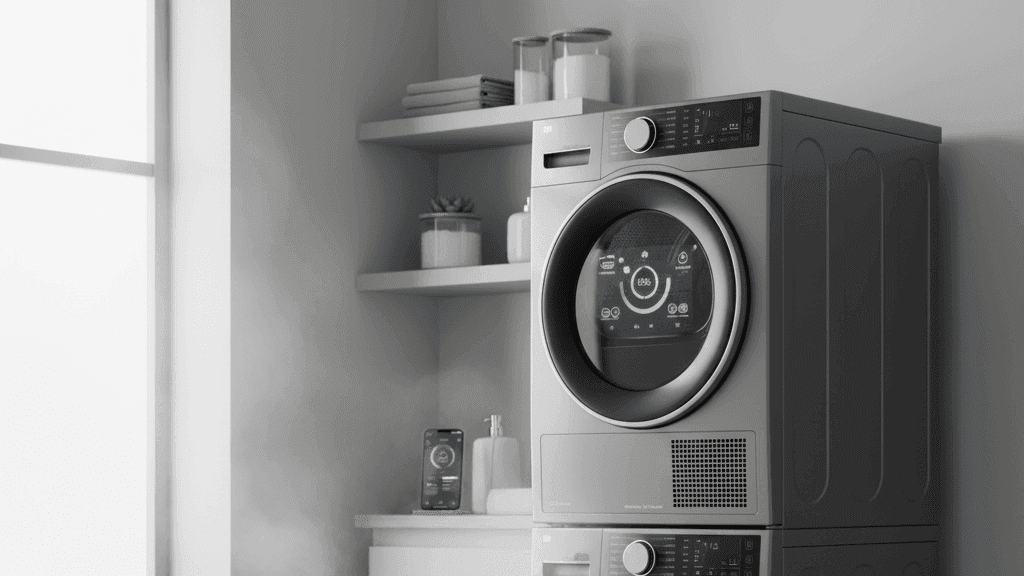
Smart Laundry: Washing Machines That Think for You

My relationship with my washing machine used to be entirely passive. I put clothes in, set a cycle, came back later. The machine did whatever it did, and I had no particular visibility into or control over any of it. Shirts I liked got ruined. Things came out less clean than they should have. I had no idea whether the cycle I was selecting was appropriate or not because the differences between the settings were explained in jargon that I had never bothered to properly understand.
Smart washing machines address different parts of this passivity in different ways, and separating what is genuinely useful from what is marketing language attached to ordinary features requires a bit of clarity about what the technology actually does.
The Two Things Companies Mean by Smart
Before looking at specific features or models, it is worth understanding that the word smart gets applied to washing machines in two distinct ways that have almost nothing to do with each other.
The first meaning is Wi-Fi connectivity. A machine that can connect to your home network and be controlled or monitored through an app. You can start or pause a cycle remotely, receive a notification when laundry is done, download new wash programmes, and sometimes check maintenance status. The machine itself is not doing anything more intelligent than a conventional one. It is just connected.
The second meaning is sensor-based load detection, usually marketed as AI. These machines use sensors to measure the weight, fabric composition, and soil level of what is inside and automatically adjust water temperature, drum movement pattern, cycle duration, and detergent dosing accordingly. You put clothes in without selecting settings and the machine makes those decisions based on what it detects.
The best machines combine both. But the two categories have different practical values, and conflating them leads to disappointment in one direction or the other.
Wi-Fi Connectivity: Useful but Not Transformative
The remote control capability of a connected washing machine is genuinely convenient in specific scenarios. Leaving the house with laundry in the machine and realising you want it to start later rather than immediately is a real situation that remote control handles elegantly. Getting a push notification when a cycle finishes means you know the precise moment to move clothes to the dryer rather than checking repeatedly or forgetting for an hour.
Beyond those scenarios, most people find the app connectivity less central to daily life than the marketing suggests. The routine of putting laundry in and pressing start on the machine takes about thirty seconds and does not particularly benefit from being done from another room. If you are considering a connected machine specifically for the remote control features, honest self-assessment about whether those situations come up regularly enough to justify the premium is worthwhile.
What is more sustainably useful is the maintenance monitoring. Smart machines that track the number of cycles and water hardness in your area, then alert you when drum cleaning or descaling is needed, extend machine lifespan in a practical way. This is the kind of quiet background benefit that adds real value over years of ownership without requiring any ongoing attention.
AI Load Detection: Where the Technology Has Real Merit
The sensor-based washing intelligence is more impactful than the connectivity features, particularly for households that regularly mix fabric types in a single load or that have experienced machine damage to delicate items.
LG's AI Direct Drive system, which the company uses across much of their front-load range, detects fabric weight and softness through the motor's torque sensing and adjusts the drum movement pattern accordingly. The machine has multiple different drum motion types programmed and selects and combines them based on what it detects inside. Delicate fabrics get gentle motion that minimises mechanical stress. Heavy items like towels and denim get more vigorous cleaning. Mixed loads get a calibrated combination.
The practical benefit for most households is primarily reduced fabric damage over the long term. Clothes that are consistently washed more gently than their actual cycle setting would warrant last longer. This is not something you notice immediately but it becomes apparent over years of ownership.
Samsung's approach in their higher-end models adds bubble technology, which mixes detergent into micro-bubbles that penetrate fabric more effectively at lower water temperatures. This enables effective cleaning at cooler cycle temperatures, which has direct energy efficiency benefits. Washing at 30 degrees Celsius instead of 60 uses significantly less energy for the same cleaning result on most everyday items.
The honest limitation of these AI systems is that they matter most for people who are not already managing their laundry well manually. If you carefully separate fabrics, select appropriate cycles, and use the right temperature for different loads, the AI is largely replicating decisions you are already making. If you tend to throw everything together and hit the first cycle that looks about right, the AI adds real protection and probably improves cleaning outcomes.
The All-in-One Washer-Dryer Question
Combination washer-dryer units, which wash and dry in the same drum without requiring you to transfer laundry, have improved significantly in recent years and the premium models from Samsung and LG are genuinely capable machines. They are, however, worth approaching with realistic expectations.
The fundamental constraint of combination units is that the effective drying capacity is smaller than the washing capacity. A machine that washes a full six-kilogram load cannot dry all of that in one pass. If you regularly do large loads, this means either washing a full load and drying it in two batches, or restricting load size to stay within the effective drying capacity. This is a workflow consideration worth thinking through before buying.
Cycle times for a full wash and dry sequence are long. Two to four hours for a moderate load is typical, and heavier items or larger loads take longer. For households accustomed to moving washing to a separate tumble dryer and having laundry done in a total of two hours, this is an adjustment.
The heat pump drying technology used in current premium combination units is genuinely better than older condenser technology. It operates at lower temperatures, which is gentler on fabrics and more energy efficient than traditional heating elements. The improvement in drying quality relative to older combination units is real and meaningful.
For households with genuinely limited space where fitting separate washing and drying machines is not viable, a quality combination unit is a practical solution. For households where space is available for separate appliances, separate machines remain the more time-efficient option.
Features Worth Paying For, Features Not Worth the Premium
The features that provide tangible daily value in smart washing machines are consistent across brands and worth prioritising.
An inverter motor, which adjusts speed rather than simply running at full speed and switching off, is quieter, more energy efficient, and typically more reliable over time than conventional motors. This is now standard on most mid-range and above machines from major brands and is not particularly related to smart features, but worth confirming.
Steam functionality genuinely sanitises laundry at temperatures that kill bacteria and dust mites, is effective for refreshing garments that are not dirty but have absorbed odours, and reduces the amount of ironing required by relaxing fabric fibers. This is a feature I would prioritise over most connectivity features.
Auto-dosing, where the machine holds a reservoir of liquid detergent and automatically doses the correct amount for each load based on the load's detected weight, reduces both detergent waste and the common problem of using too much detergent, which leaves residue on clothes and can damage machine seals over time.
The features that rarely justify their premium cost are the more exotic connectivity integrations, such as integration with voice assistants for machine control, downloadable specialty cycles that most owners never access, and real-time water usage monitoring that provides data without particularly actionable insights for most people.
Whether a Smart Machine Is Worth It
The honest answer depends on how your household does laundry now and what specific problems you are hoping to solve.
If you want to stop worrying about appropriate cycle selection and fabric care, a machine with genuine load-detecting AI is worth the investment. The protection it provides to clothes over years is real even if invisible on any given wash.
If you want the convenience of remote monitoring and notifications, any Wi-Fi connected machine delivers this, and you do not need to pay for the premium AI features to get it.
If you are buying a new machine anyway and the price difference between a smart and non-smart option in your preferred capacity is modest, the smart features add enough value to be worth including.
If the price gap is significant and you manage your laundry carefully already, a quality conventional machine may serve you just as well for considerably less money.
I have been using a machine with both load detection and Wi-Fi connectivity for about two years. The notification when laundry is done is the feature I use every day. The AI load sensing I think about rarely, but I believe it is the reason none of my clothes have been damaged in those two years.
