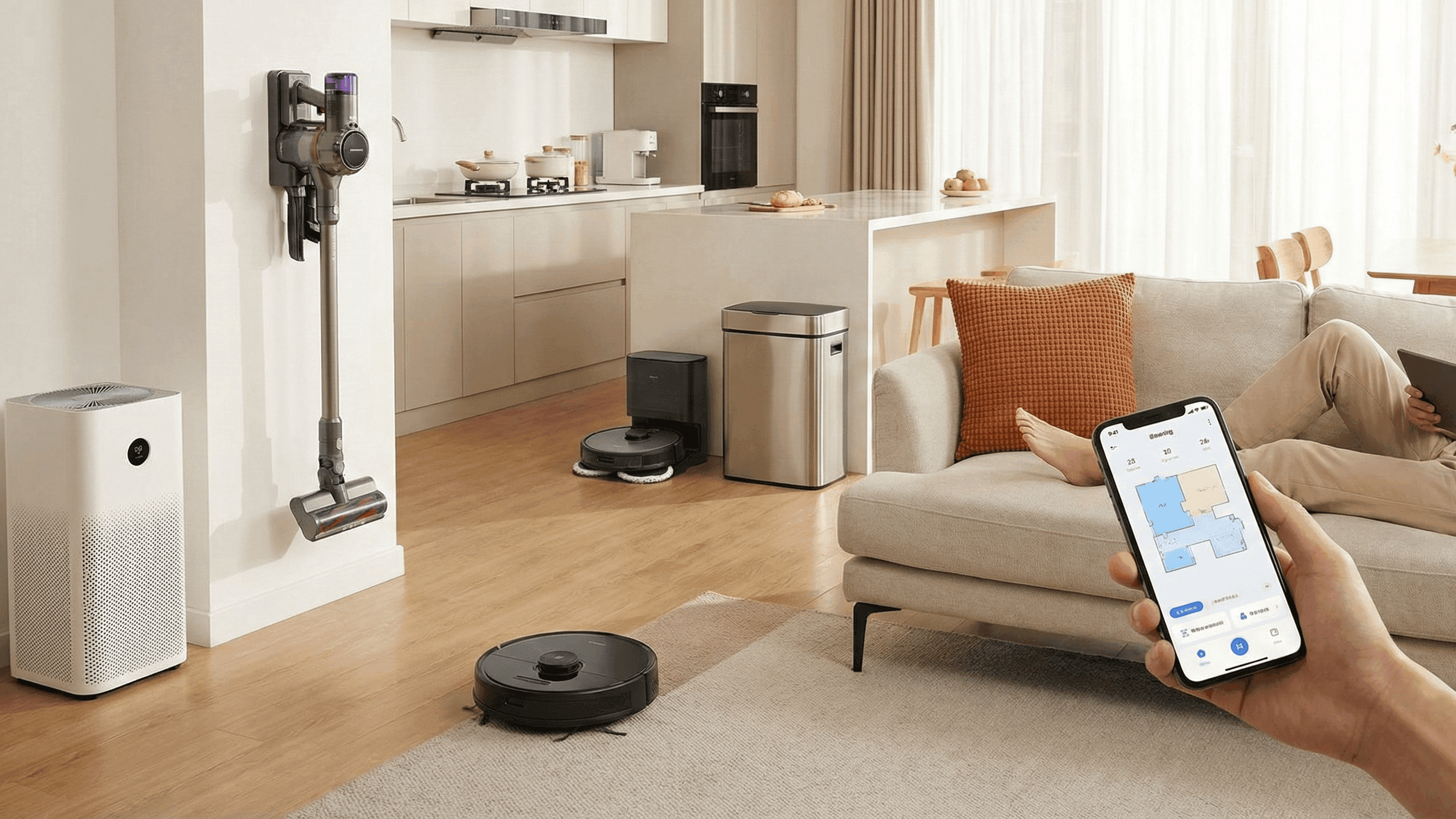
Smart Cleaning Gadgets That Actually Saved Me Time (Not Just Money)

I have bought cleaning gadgets that ended up in a cupboard within a month. A window cleaning robot that got stuck on the frame more often than it cleaned the glass. A cordless mop that required more maintenance than the floor cleaning it was supposed to simplify. A device that claimed to be smart but was really just a slightly more complicated version of something I already owned.
The experience has made me fairly specific about what I mean when I say a cleaning gadget is worth buying. The test is not whether it is clever or has impressive specifications. The test is whether it reduces the actual time I spend thinking about and doing cleaning, not just whether it shifts the effort to a different form. A gadget that requires fifteen minutes of setup and maintenance for ten minutes of cleaning is not saving time. It is just redistributing it in a way that feels more technological.
This is about the devices that passed that test. The ones that are still in regular use, that I would replace immediately if they broke, and that have genuinely changed the cleaning workload rather than just the method.
The Robot Vacuum: The Biggest Return on Any Cleaning Investment
A robot vacuum that works properly is the cleaning device with the highest ratio of time saved to cost and effort invested. Nothing else comes close for the specific type of cleaning it handles.
The key qualifier is "works properly," because cheap robot vacuums do not work properly. They get stuck constantly, their mapping is unreliable, their suction is inadequate for real floors with actual debris, and the experience of managing them is more effort than doing the floor yourself. The experience of a well-made robot vacuum is almost the opposite: you set a schedule, you largely forget about it, and your floors are consistently cleaner than they were before without any direct action from you.
The specific qualities that separate a useful robot vacuum from an expensive frustration: proper LiDAR mapping that creates an accurate floor plan of your home and cleans in methodical lines rather than random patterns; suction that handles pet hair and actual dirt rather than just surface dust; a low-profile design that can get under furniture where dust accumulates; and an app that lets you send it to specific rooms and set no-go zones around cables and obstacles.
Roborock and Dreame both make reliable mid-range models that hit these marks without requiring premium pricing. The Roborock Q5 and the Dreame D10 Plus are the models I would look at first for someone who has not used a quality robot vacuum before. Both map properly, clean thoroughly, and have app experiences that are not frustrating to use. The self-emptying dock is worth the additional cost if you want to genuinely minimise how often you think about the device: it empties the robot's bin automatically after each run, meaning you only need to deal with the dock's larger container every few weeks.
The habit change the robot vacuum enables is the most significant part of its value. When you stop having dedicated cleaning days for floors and instead have floors that are maintained continuously, the mental overhead of "I need to vacuum" largely disappears. That is not a trivial benefit.
The Cordless Stick Vacuum: Making Immediate Action Easy
The robot vacuum handles the regular maintenance. The cordless stick vacuum handles everything else: the spots the robot cannot reach, the quick cleanups after cooking, the sofa and chairs, the stairs, the car.
What makes a cordless vacuum distinctly more useful than its corded equivalent is not the power difference but the friction difference. A corded vacuum requires locating it, getting the cord out, finding a plug point, managing the cord while you move around, and putting everything away afterward. A cordless vacuum on a wall mount means picking it up, using it for thirty seconds, and putting it back. That difference in friction is what determines whether you deal with a small mess immediately or tell yourself you will deal with it later and then forget.
The features worth paying attention to: battery life long enough for your space without being excessive (a 20-minute battery is sufficient for most apartments, 40 minutes for larger homes), a motorised floor head that handles your primary floor type effectively, a dust bin that empties cleanly without requiring you to handle the contents, and a handheld mode for furniture and awkward spaces.
The Dyson V-series vacuums are the premium benchmark and genuinely excellent, but the price gap between them and mid-range alternatives from Shark or Miele is significant and the performance gap for typical apartment use is smaller than the price difference suggests. A mid-range cordless vacuum that you actually pick up and use daily is more valuable than a premium one that feels too nice to grab for quick jobs.
The Electric Scrubber: Removing the Worst Part of Bathroom Cleaning
Tile grout, soap scum around taps, the base of the toilet, the floor around the shower: these are the parts of bathroom cleaning that take the most time and cause the most avoidance. They require sustained scrubbing pressure that is boring and physically tiring in a way that other cleaning tasks are not.
An electric scrubber handles the sustained pressure and motion mechanically, which means you are still doing the targeting and applying the cleaning product, but the repetitive effort is offloaded to the motor. Tasks that previously took extended elbow grease take noticeably less time and the areas come cleaner because the scrubbing is more consistent than manual effort.
The practical result is not that bathroom cleaning becomes pleasant. It is that it becomes quick enough to be done in short sessions rather than requiring a dedicated block of time. When the perceived effort of a task drops, the threshold for doing it drops with it, which means it happens more frequently and the bathroom never reaches the state that requires the most effort to restore.
Features worth checking: waterproofing adequate for bathroom use, interchangeable brush heads in different sizes for different areas, weight that is manageable when holding it above shoulder level for the shower surround, and a battery life that covers a full bathroom in one charge.
An Air Purifier as a Cleaning Tool
An air purifier is not intuitively a cleaning device because it does not clean any surface. What it does is reduce the rate at which surfaces get dirty, which has a compounding effect on how often you need to clean them.
In an apartment with noticeable dust accumulation, a HEPA air purifier running consistently reduces the amount of fine particulate that settles on surfaces. Shelves, screens, and furniture stay cleaner for longer between wipes. The difference is not dramatic in any individual day but over weeks it is measurable: surfaces that previously needed dusting twice a week might only need it once.
For people with dust allergies, the reduction in airborne particles has health benefits that extend beyond the cleaning convenience. For people who live in urban environments with higher outdoor pollution, the indoor air quality improvement is meaningful.
The right place for an air purifier in a cleaning context is a room where dust accumulation is most noticeable and most annoying: usually a bedroom or a room with a lot of electronics and screens. A purifier in a room that does not have a dust problem does less. A purifier in a room where you regularly notice dust on surfaces within a day or two of cleaning makes a real difference.
Smart Plugs on Heat-Producing Appliances
This belongs in any honest discussion of cleaning gadgets because one of the most consistent sources of cleaning work is accidental damage from appliances left on: scorched fabric, burn marks on surfaces, smoke residue.
A smart plug on an iron, garment steamer, or portable heater with an automatic cutoff after a set period eliminates the specific anxiety of "did I leave it on" and the specific disaster of finding out you did. Schedules that cut all non-essential plugs when you leave the house, or when your bedtime routine runs, handle this automatically without requiring you to remember.
The cleaning relevance is direct: preventing burn damage prevents the cleaning work of dealing with it, and preventing the anxiety prevents the distracting background thought that competes with getting other things done.
What Did Not Make This List and Why
Window cleaning robots deserve mention as a category that sounds useful and often is not, at least at the price points accessible to most people. The sensors that prevent them from falling off the glass also cause them to get stuck on window frames, ledges, and external mounts, often requiring manual intervention during the cleaning run. For windows that are genuinely difficult to reach and clean manually, a purpose-built window cleaning robot from a premium brand can be worth it. For typical windows, a squeegee and a microfibre cloth remains faster.
Very cheap robot vacuums, which occupy a lower price tier than the mid-range models mentioned above, reliably cause more frustration than they resolve. Getting stuck under furniture, failing to navigate back to the dock, missing large sections of floor, and generating random error codes are common experiences with budget robot vacuums. Saving money here and buying later at a proper price point produces a better outcome than buying cheap early.
The cleaning devices in regular use in my apartment are a Roborock robot vacuum on a daily schedule, a cordless stick vacuum on a wall mount in the hallway, and an electric scrubber for the bathroom. The combination handles the vast majority of cleaning without a dedicated cleaning day ever appearing in my schedule.


