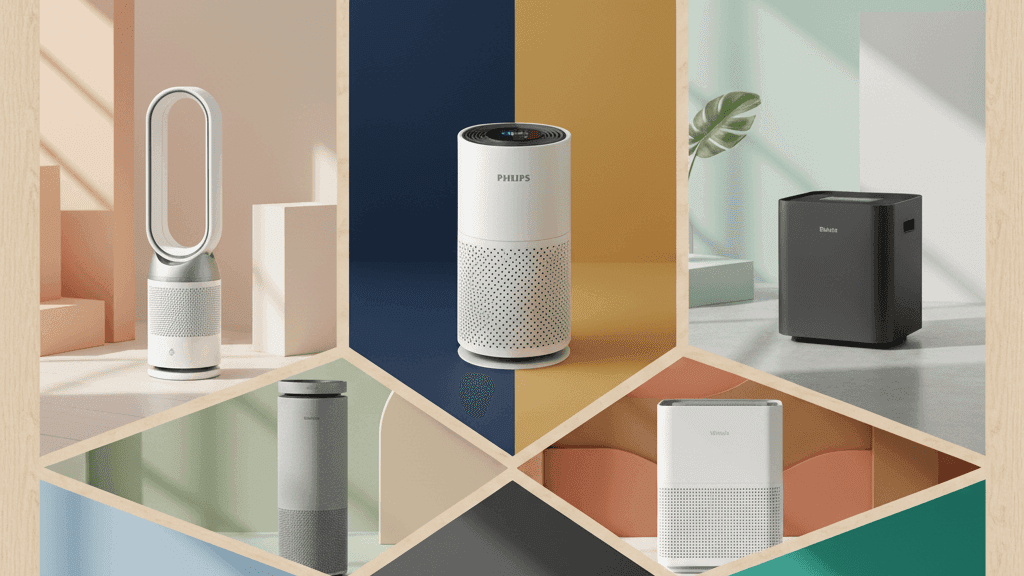
Best Air Purifiers in 2025: Trusted Models Compared for Clean Air
Breathing easy has become a real challenge in many Indian cities, especially during winter months when smog can turn even a short walk outside into a health risk. With air quality taking a turn for the worse, air purifiers have gone from luxury gadgets to household essentials for many families. But picking the right model isn’t easy. The market is crowded with tall claims, complicated specs, and some brands that just don’t live up to the hype.
This guide dives deep into the best air purifiers for India in 2025, comparing trusted models from major global brands and emerging players. The focus? What works in real Indian homes—for dust, smoke, allergens, and those record-breaking PM2.5 days. Let’s break down what you need to know before spending your money.
What Really Matters in an Air Purifier for Indian Homes?
HEPA Filters: High-Efficiency Particulate Air (HEPA) filters are the gold standard, capturing up to 99.97% of particles as small as 0.3 microns. These block a huge range of pollutants, including dust, pollen, pet dander, and much of the notorious PM2.5 that plagues most Indian cities in the winter.
CADR (Clean Air Delivery Rate): This figure measures how quickly a purifier cleans the air in a specific size room. Bigger CADR means faster cleaning, better for larger or more polluted rooms. Always match the CADR with your room size.
Activated Carbon: Many Indian households grapple with odors from cooking, VOCs from furniture, and of course, city pollution. A quality carbon filter is a must-have for removing gases, smells, and some chemical toxins.
Smart Sensors & Automation: PM2.5 sensors, automatic operation, filter change reminders, and remote app control have very real utility, especially if you’re busy and just want things to work without fuss.
Maintenance and Filter Cost: Some models cost a lot up front but hit you with expensive filter replacements or tricky servicing schedules. Models with long-life filters and easy replacements are better for real-world use.
Dyson Purifiers: The Premium Option
Popular Models: Dyson Purifier Cool TP07, Purifier Hot+Cool HP07, Purifier Cool Formaldehyde TP09
Dyson is a favorite for those who want top-tier performance, slick design, and advanced smart features. Their bladeless, tower-style purifiers look stunning in any room. The filtration system in models like the TP07 and HP07 catches particulates down to 0.1 microns and absorbs gases with a deep bed of activated carbon granules. The TP09 also removes formaldehyde, a rare feature still not standard on most market models.
Auto mode, PM2.5 display, and app connectivity (Dyson Link) are all included. Plus, the machines double up as powerful fans, and some versions provide heating for cold Delhi or North Indian winters.
What you’re paying for: The best filtration tech and beautiful, safe design.
Downsides: High price, and yearly filter costs are above average. The airflow is powerful but the purifiers can get noticeably noisy at top speeds.
Philips: Reliable Performance for Busy Households
Popular Models: Philips AC2887/20, AC1215/20, 3000i Series
Philips is trusted in India for a reason: their air purifiers consistently offer solid performance, wide availability of filters, and reasonable maintenance costs. The AC2887/20, for example, is a mainstay in Indian apartments. It uses a multi-layered system: a pre-filter for larger dust, a HEPA filter for PM2.5, and a thick carbon filter for odors and smoke.
Smart Light Ring indicators make it simple to know your air quality at a glance. There are various fan speeds, sleep modes, and a “Turbo” setting for the days when AQI spikes through the roof. Philips has also made its controls childproof and offers app-connected models for remote management.
Strengths: Affordable, dependable, filter changes are easy, and filter replacements are readily available at local shops.
Weakness: Plastic build looks simple, and smart features can feel basic compared to pricier options.
Coway AirMega: Filtration First, Fuss-Free Operation
Popular Model: Coway AirMega 150, AirMega 200, AirMega AP-1220B
Coway is famous for its medical-grade HEPA filters that have been independently tested for reliability. The AirMega 150 and 200 models are especially well-suited for Indian apartments and bedrooms.
They utilize a washable pre-filter, a dense Green Anti-Virus HEPA filter, and an effective carbon filter. AirMega models have straightforward controls, filter indicators, and low running noise, making them a favorite among families with babies or the elderly.
Strengths: Extremely quiet, long filter lifespans, strong after-sales support in India.
Watch Out: Not as many “smart” features; no app connectivity or real-time air quality graphs.
Xiaomi Mi Air Purifier Series: Smart Features on a Budget
Popular Models: Mi Air Purifier 4, 4 Lite, and 4 Pro
Xiaomi’s series packs a surprising set of features for the price. The latest models combine a true HEPA filter with a high-volume fan, meaning you get effective PM2.5 removal for small and medium rooms. Real-time AQI displays, “Auto,” “Night,” and “Turbo” modes, plus app connectivity (via Mi Home) are standout features in this price range.
The Mi Air Purifier 4 Pro, for example, is strong enough for spaces up to 600 sq. ft., making it ideal for larger bedrooms or living rooms. Filters are easy to change, and generic replacements are widely available.
Best for: Budget shoppers who want a connected, hands-off purifier that actually works during Delhi winter or in metro apartments.
Tradeoff: Build quality is a bit plasticky, and noise levels are a little higher than premium brands at full speed.
Sharp Air Purifiers: Japan’s Plasmacluster Tech
Popular Models: Sharp FP-J40M, FP-F40E-W, FP-J80M-H
Sharp’s claim to fame is their Plasmacluster Ion technology, which breaks down airborne viruses and bacteria in addition to trapping particulates. For health-conscious families, this extra disinfection is a big plus. True HEPA and standard carbon filtering are provided. The mid-range FP-F40E-W and newer “J” series are well-liked among Indian buyers for low power use and dependably quiet operation.
Many models can cover 300–600 sq. ft. and come with auto PM2.5 sensors, sleep mode, and filter change indicators. Sharp is also popular in markets with hard water and frequent dust storms.
Biggest strength: Great for allergies and asthma sufferers, with a reputation for longevity.
Limitation: Design is understated, and smart/app features aren’t as comprehensive as competitors.
IKEA STARKVIND: Smart Air Cleaning With a Design Edge
Models: IKEA STARKVIND Table and Standalone Purifier
IKEA’s new STARKVIND line is making waves for combining air cleaning and home furniture. Available as both a conventional standalone or as a stylish side table, it is designed for small city homes where space is a premium. The filter system uses a particle filter and a gas filter; it handles dust, pollen, smoke, and odors effectively for bedrooms and study spaces.
STARKVIND integrates with IKEA’s DIRIGERA hub and Home Smart app, so you can schedule cleaning cycles or check maintenance reminders with your phone. It’s less expensive than some “designer” purifiers but solidly engineered for continuous daily use.
Best for: Urban flats where style and function matter equally.
Drawback: Slightly less robust filtration compared to the very high-end or medical-grade units.
Blueair Blue Pure Series: Reliable and Easy to Use
Popular Models: Blueair Blue Pure 411, 221
Blueair is known worldwide for ultra-simple purifiers that work right out of the box. The Blue Pure series features true HEPA performance, a thick activated carbon filter, and swappable fabric pre-filters in fun colors. Maintenance is simple—just vacuum or wash the pre-filter, and swap out the main filter every six months.
No fancy screens or apps, but you get a reliable dial-based control system and clean Scandinavian design. The Blue Pure 411 is a favorite for single rooms or student apartments.
Pros: Very quiet, efficient, affordable filter replacements, great for renters or students.
Cons: Lacks app connectivity and doesn’t have air quality indicators.
Tata Swach Air+: Made for Indian Air
For those insisting on home-grown options, Tata’s Swach Air+ series is designed for India’s unique mix of pollution and dust. The filter tech is tailored for local needs, and units often feature a blend of mechanical and chemical filtration. Tata Swach air purifiers are affordable and widely available, so filter replacements aren’t a hassle.
Upside: Indian engineering for Indian pollution.
Weakness: Simpler sensor suite, with basic controls and limited smart features.
Key Takeaways
- Choose a model with a real HEPA filter (not “HEPA-type” or “HEPA-like”) for the best PM2.5 protection.
- Match purifier CADR to your space; bigger rooms need more airflow.
- Prioritize brands with affordable, easy-to-find replacement filters—this can be a hidden cost.
- If you want smart features, Xiaomi, Dyson, and IKEA deliver strong app-connected options.
- For those seeking set-and-forget simplicity, Coway and Blueair focus on reliability over bells and whistles.
Final Thoughts
No single air purifier is right for everybody. Large city homes with young kids may want a high-end model like Dyson with extra features. Cash-strapped students or renters might do best with Xiaomi or Blueair. The most important thing? Use something. With pollution only getting worse, a good air purifier is one of the soundest investments you can make for your health.
Trust the data, compare before you buy, and keep up with regular filter changes. The clean air, better sleep, and easier breathing are well worth the effort.
