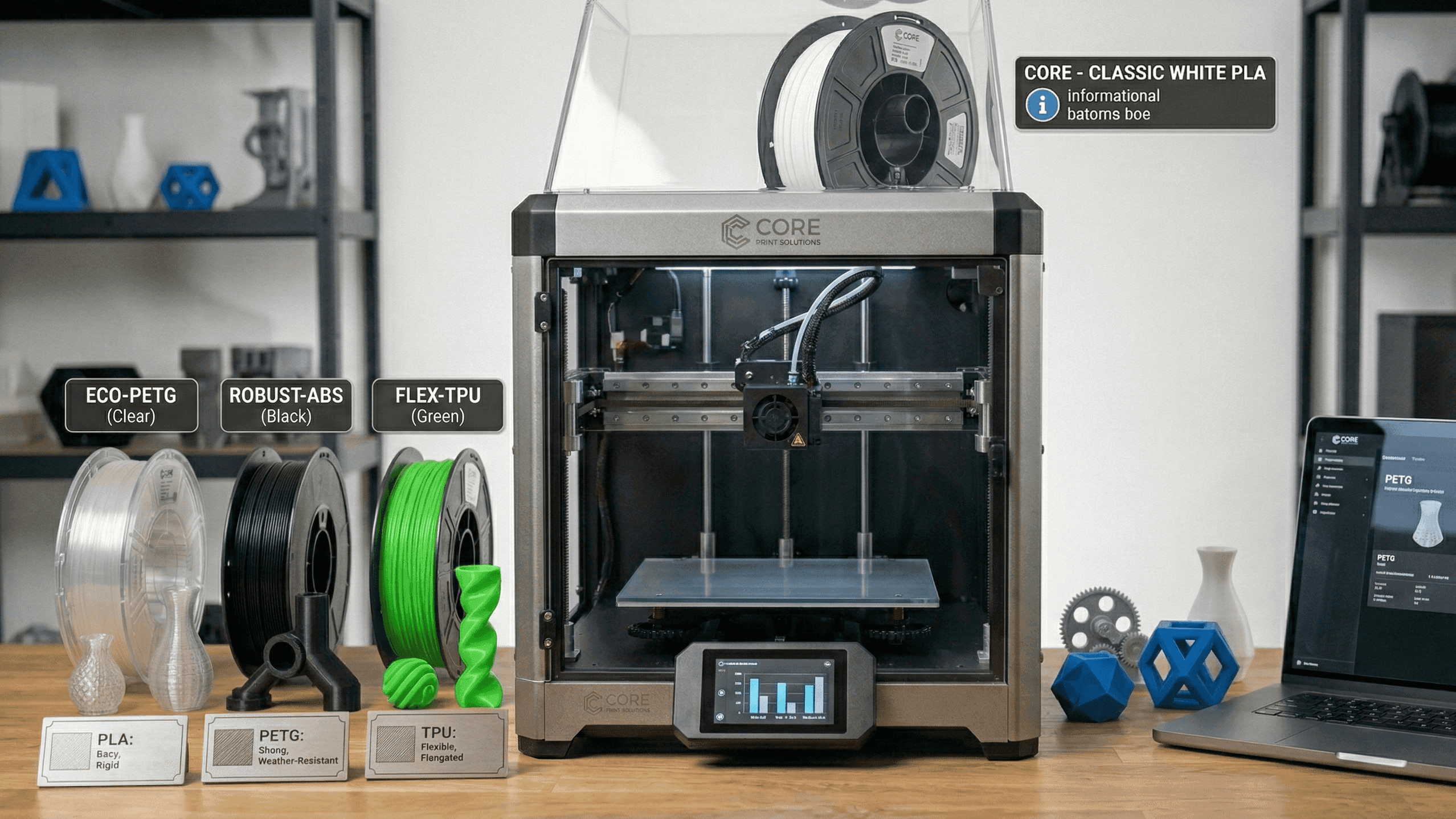
3D Printer Filaments Explained: PLA, PETG, TPU and More for Home Projects
Why Filament Matters More Than Your First Printer
When you unbox your first 3D printer, the filament spool feels like an afterthought. PLA prints beautifully right away, comes in bright colors, and seems perfect. Then reality hits. Your custom thermostat mount softens near a sunny window. The cable clips crack when you tug too hard. Your outdoor sensor enclosure turns brittle after a month of weather exposure.
Different filaments exist for good reasons. The right material turns "good enough" prints into durable, functional parts that actually solve problems. For smart home builders, filament choice determines whether your wall mount lasts five years or ends up in the recycling bin after five months. This guide walks through the most practical filament types you'll encounter, always focusing on real-world home applications rather than lab specifications.
Each section covers what the material does well, where it fails, specific projects where it shines, printing tips that prevent common headaches, and trusted brands that deliver consistent results. By the end, you'll know exactly which spool to buy for your next smart home bracket, outdoor enclosure, or flexible cable guide.
PLA: Your Training Wheels (With Real Limitations)
Polylactic Acid, or PLA, remains the default choice for good reason. Derived from cornstarch and sugarcane, it prints at lower temperatures between 190-220°C with almost no drama. No enclosure needed, minimal bed adhesion issues, and beautiful surface finish right out of the box.
PLA delivers exactly what beginners need to build confidence:
- Vibrant colors and finishes. Hundreds of options including silk, glitter, wood-look, metal-filled, and glow-in-the-dark variants.
- Sharp details. Great for text, logos, and decorative elements on organizers and display stands.
- Zero warping. Prints sit flat without lifting edges, even on glass beds.
- Fast printing speeds. Handles normal speeds without quality loss.
Perfect first projects include:
- Indoor cable management clips and organizers that match your exact drawer sizes.
- Desk accessories like phone stands, pen holders, and headphone hooks.
- Smart home mounts for thermostats, motion sensors, and smart plugs located away from heat sources.
- Decorative planters, bookends, and shelf risers.
- Cosplay props and display models that don't bear weight.
The limitations become obvious quickly:
- Brittle nature means parts snap under impact or flexing. Dropped phone stands often shatter.
- Low heat tolerance around 60°C. Avoid near radiators, sunny windowsills, or kitchen appliances.
- Poor UV resistance causes fading and embrittlement outdoors within months.
- Not suitable for mechanical stress or load-bearing applications.
Recommended brands:
- Prusament PLA offers unmatched consistency and color accuracy.
- eSun PLA+ provides slightly better toughness while maintaining PLA simplicity.
- Polymaker PolyTerra creates beautiful matte finishes that hide layer lines elegantly.
Printing success formula: Use a bed temperature of 50-60°C to prevent elephant's foot (squished bottom layers). Clean your bed surface religiously between colors. Store PLA in a dry box if you live in humid areas.
PETG: The Reliable Workhorse for Functional Parts
Once PLA's limitations become clear, most people graduate to PETG. This material combines PLA's printability with much better durability and temperature resistance. Hotend temperatures run 230-250°C with bed temps around 70-80°C.
PETG transforms functional prints:
- Impact resistance. Survives drops and tugs much better than PLA.
- Layer adhesion. Creates strong bonds between layers for solid parts.
- Heat tolerance up to 80°C. Handles most indoor environments comfortably.
- Chemical resistance. Won't degrade from cleaners or hand sanitizers.
- Food-safe grades available. Look for FDA-certified versions for kitchen tools.
Smart home applications where PETG shines:
- Wall mounts holding 2-5kg of smart devices like floodlights or security cameras.
- Raspberry Pi enclosures and electronics project housings.
- Mechanical components including drawer slides, hinges, and gear prototypes.
- Window-mounted sensor housings receiving indirect sunlight.
- Tool handles and replacement appliance knobs.
Common printing challenges and fixes:
- Stringing between moves. Increase retraction distance slightly (4-6mm) and speed up travel moves.
- Over-adhesion to bed. Apply glue stick, hairspray, or use dedicated PETG build surfaces.
- Blobbing at layer changes. Enable Z-hop and coasting in your slicer settings.
Trusted PETG brands:
- eSun PETG sets the affordability and reliability standard.
- Overture PETG excels at layer bonding and minimal stringing.
- Polymaker PolyLite PETG offers premium consistency across colors.
Pro move: Always print a temperature tower test when trying a new PETG brand. Optimal settings vary significantly between manufacturers.
TPU: Flexibility for Real-World Applications
Thermoplastic Polyurethane prints rubber-like parts that bend, stretch, and absorb vibration. Shore hardness ratings from 85A (very soft) to 98A (firm but flexible) let you dial in exact flexibility.
TPU solves problems rigid plastics can't:
- Cable strain reliefs prevent smart plugs and chargers from fraying at the connector.
- Vibration mounts for hard drives, pumps, and camera gimbals.
- Flexible hinges and snap-fit lids that survive thousands of open/close cycles.
- Phone cases and grips that protect devices without adding bulk.
- Weather seals and gaskets for enclosure doors.
Direct drive extruders make TPU printing reliable:
- Print speeds max out at 20-40mm/s.
- Minimal or zero retraction prevents filament jams.
- Good cooling fan performance eliminates overheating.
- Bed adhesion improves with glue stick or blue painter's tape.
Shore hardness guide:
- 85A creates tire-like softness for phone cases and grips.
- 92A works well for seals, hinges, and wearable components.
- 95A handles belts, watchbands, and firm flex applications.
Recommended TPU:
- SainSmart 95A balances flexibility and printability perfectly.
- Inland TPU delivers consistent results across printers.
- NinjaTek Cheetah offers high-speed TPU printing capabilities.
Smart home example: Flexible mounts grip irregular ceiling textures better than rigid plastic clips.
ABS and ASA: Serious Materials for Serious Applications
ABS created LEGO bricks and automotive dashboards. Tough, heat resistant (80-100°C), and slightly flexible.
ASA improves on ABS with excellent UV resistance for permanent outdoor use.
Choose ABS/ASA when you need:
- High temperature tolerance near heaters, engines, or sunny dashboards.
- Impact resistance for tools and mechanical assemblies.
- Outdoor durability (ASA specifically withstands years of sun exposure).
- Chemical resistance from fuels, cleaners, and solvents.
Printing ABS/ASA demands respect:
- Fully enclosed printers prevent warping from drafts.
- High bed temperatures (90-110°C) ensure first layer adhesion.
- ABS fumes require garage or workshop ventilation.
- Draft-free environment remains critical.
Outdoor smart home applications:
- ASA enclosures housing weather stations and doorbell cameras.
- Mounting brackets exposed to direct sunlight and rain.
- Permanent garden sensor housings and irrigation controllers.
Reliable brands:
- Prusament ASA leads outdoor performance.
- Polymaker PolyMax PLA offers ABS-like strength with PLA simplicity.
- eSun ABS provides dependable engineering-grade results.
Nylon and PC: Professional-Grade Strength
Nylon (Polyamide) delivers unmatched toughness and flexibility:
- Bearing surfaces and sliding mechanisms wear far better than PLA/PETG.
- High impact resistance survives drops and abuse.
- Chemical resistance handles oils, fuels, and cleaners.
- Low friction creates smooth-moving parts.
Polycarbonate (PC) offers extreme strength:
- Bulletproof transparency for equipment guards.
- High heat tolerance (120°C+).
- Impact resistance exceeds most engineering plastics.
Both materials demand dry storage and enclosed printing. Nylon especially absorbs moisture like a sponge.
Specialty Filaments for Creative Projects
Wood filaments blend PLA with wood fibers for authentic grain patterns. Sands beautifully for furniture-like finishes.
Carbon fiber composites (PETG+CF, PA+CF) create stiff, lightweight structural parts. Requires hardened steel nozzles due to abrasiveness.
Metal-filled filaments print genuine metal weight and finish. Post-process with sanding and polishing.
Support materials (PVA, HIPS) dissolve in water, enabling impossible overhang geometries.
Filament Storage: The Secret to Reliable Prints
Moisture destroys filament performance. Here's your storage system:
Essential setup:
- Airtight containers with desiccant packs for all hygroscopic filaments (PETG, TPU, Nylon).
- Filament dryers ($30-60) revive wet spools overnight.
- Label containers with purchase date and storage conditions.
Quick moisture test: Extrusion sounds wet or bubbles = dry before printing.
Temperature guidelines:
- Store all filament at comfortable room temperature.
- Avoid garages unless climate controlled.
- Never leave spools on hot printers between jobs.
Matching Filaments to Smart Home Projects
Indoor mounts and organizers: PLA works perfectly and looks great.
Load-bearing brackets (2-5kg): PETG provides necessary toughness.
Outdoor enclosures: ASA survives years of weather exposure.
Cable management: TPU strain reliefs prevent fraying.
Mechanical components: Nylon or PC for moving parts.
Decorative pieces: Wood or silk PLA filaments elevate aesthetics.
Cost vs Performance Reality Check
Budget filament ($18-25/kg): Perfect for learning and decorative prints.
Mid-range ($25-35/kg): Reliable performance for functional parts.
Premium ($35+/kg): Engineering applications and outdoor use.
Volume buying and bulk spools save 20-30%. Test small quantities before committing.
Troubleshooting Common Filament Problems
Brittle prints: Check storage conditions and print temperature.
Stringy PETG: Increase retraction and travel speed.
Warping ABS: Verify enclosure seal and bed adhesion.
TPU jams: Slow down and disable retraction.
Your slicer's "calibration shapes" library reveals filament behavior quickly.
Building Your Filament Collection Strategically
Starter kit (3 spools):
- PLA (general decorative/indoor use).
- PETG (functional indoor parts).
- ASA (outdoor projects).
Expand later:
- TPU for flexible applications.
- Nylon/PC for engineering needs.
- Specialty filaments for creative projects.
Organize by material type and print frequency. Keep one spool of each "active" on the printer.
The Right Filament Makes 3D Printing Practical
Filament selection transforms 3D printing from novelty to problem-solving tool. PLA teaches you to print. PETG builds functional parts. ASA survives outdoors. TPU solves flexibility challenges. Each material expands what you can create around the home.
Start simple with PLA and PETG. Let project needs guide future purchases. Over time, you'll develop instincts for matching material properties to application requirements. Your smart home transforms from purchased components to genuinely custom solutions.
What will you print first with your newfound filament knowledge?
